
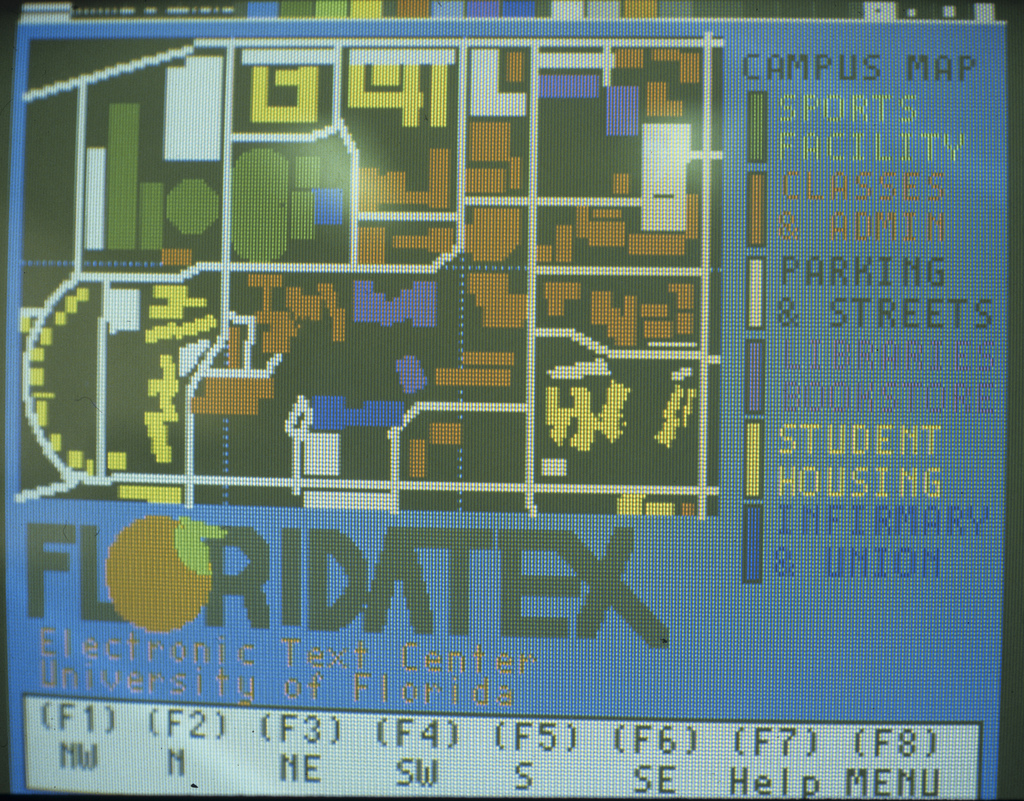
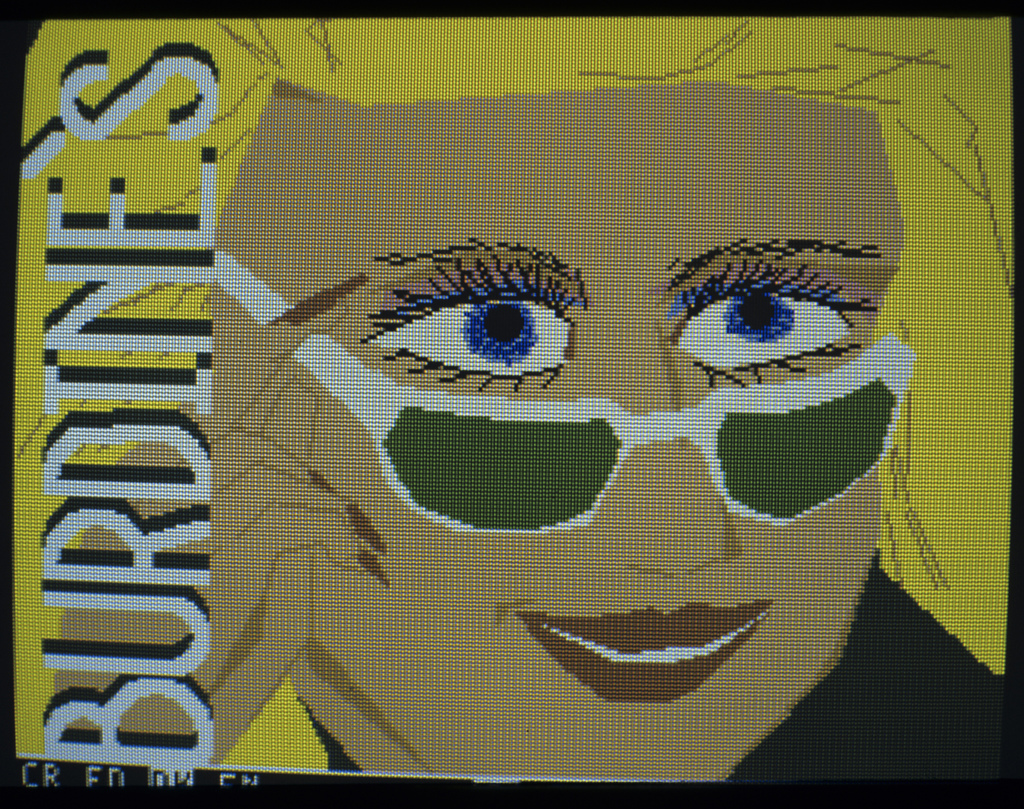
Floridatex, a student work by Robertson Adams, 1980s. The first image was made with an AT&T Frame Creation Terminal 100. Unknown source. It is possible that this was never live, but part of the videotex experiments at the University of Florida. (see p.45)
Tag Archives: usa
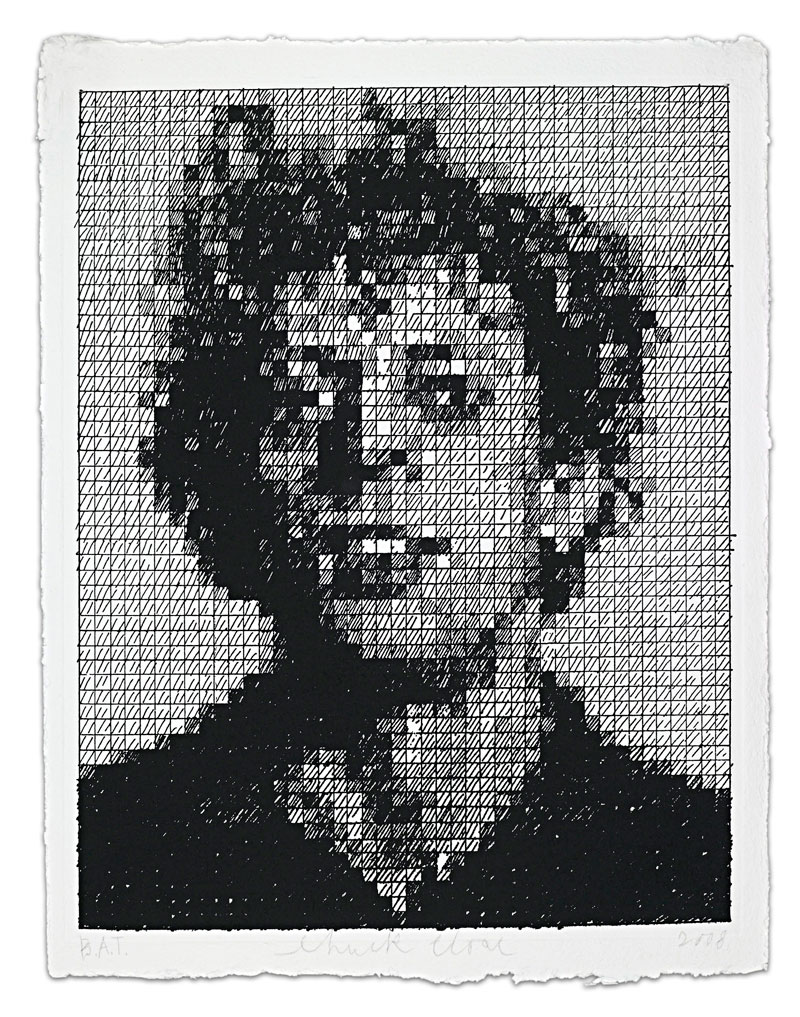
Phil Crosshatch by Chuck Close, 2010. Engraving with embossment on Twinrocker handmade paper.
Telidon/NAPLPS ads created for Bank of America (1982) by John Vaughan at The Communication Studio. More examples on his Youtube channel. In 2019 he posted more graphics and info on his blog.
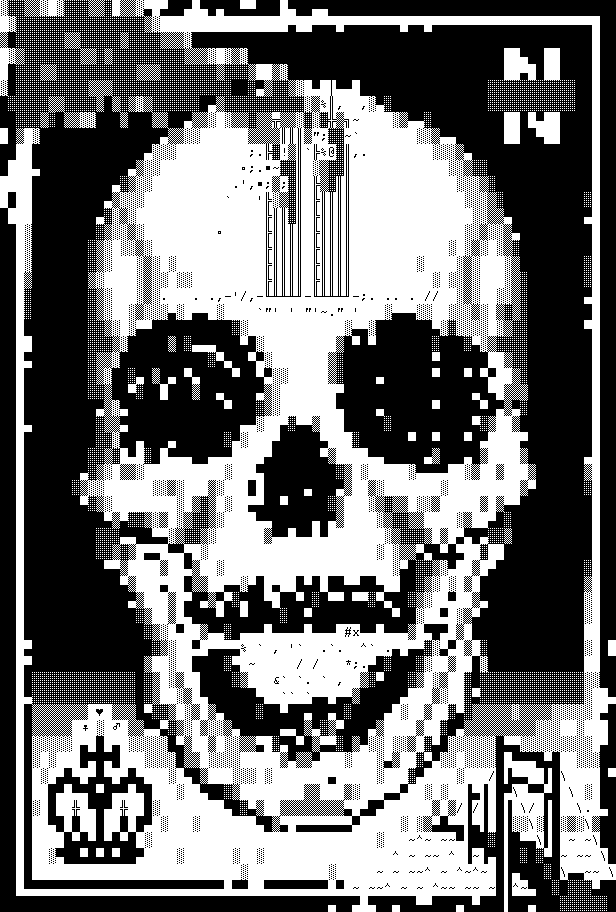
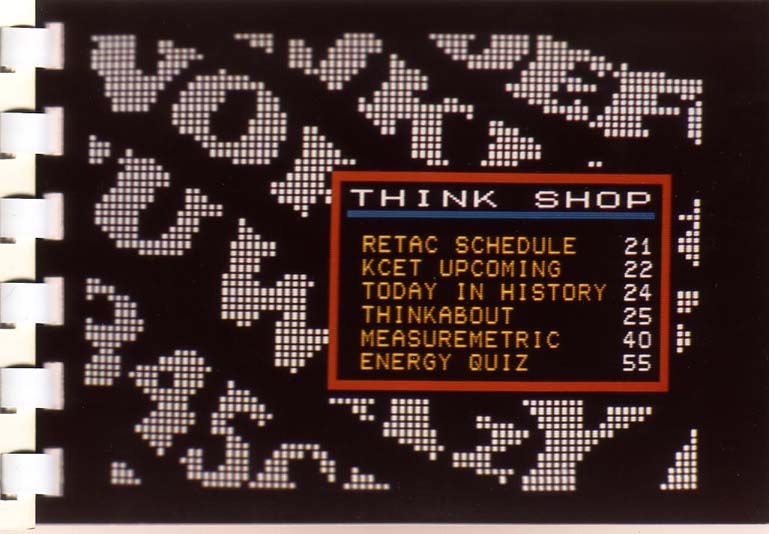
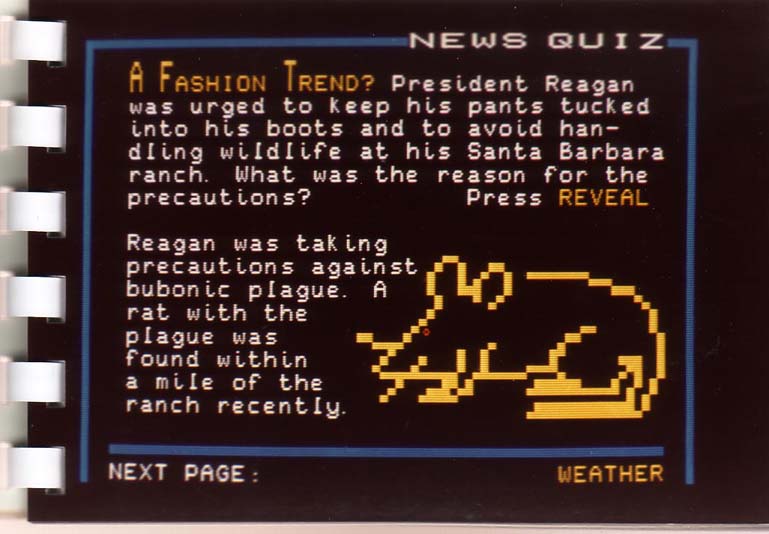
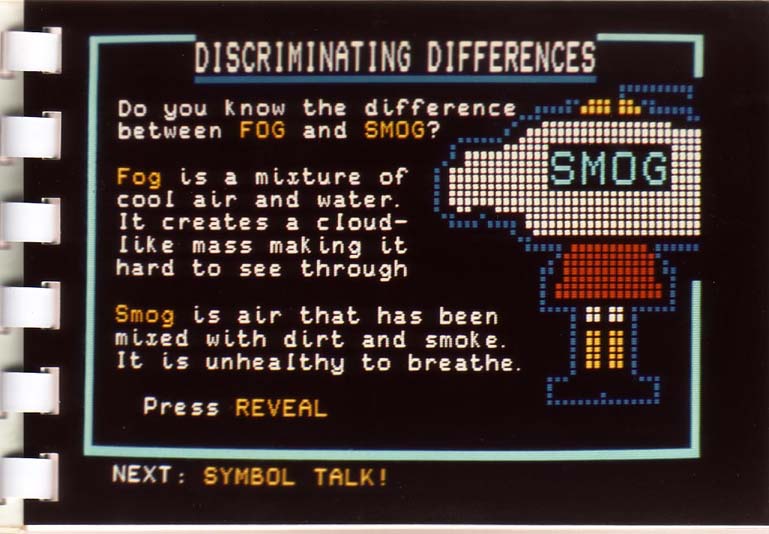
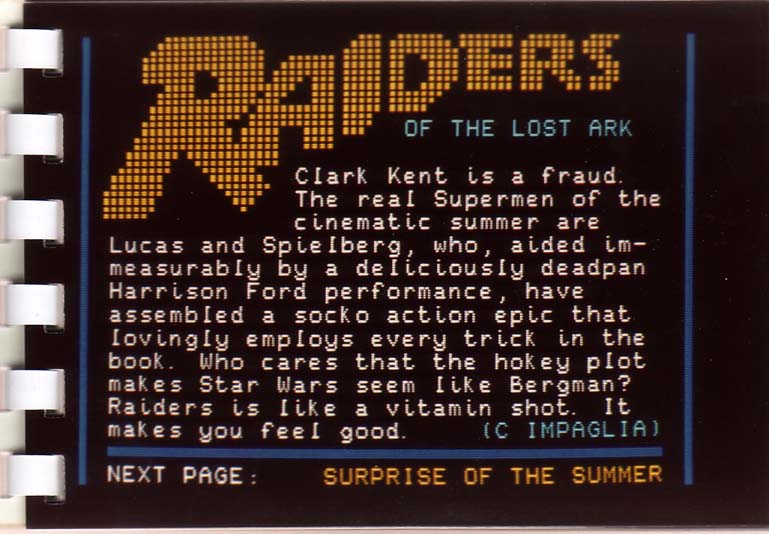
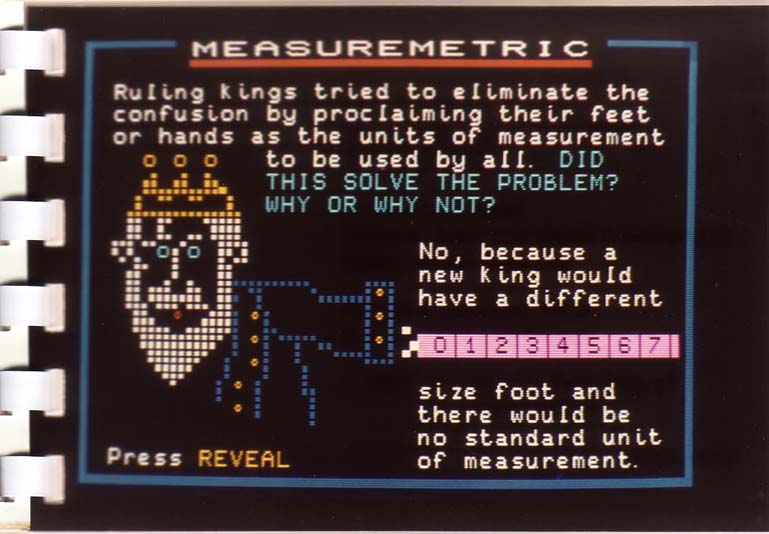
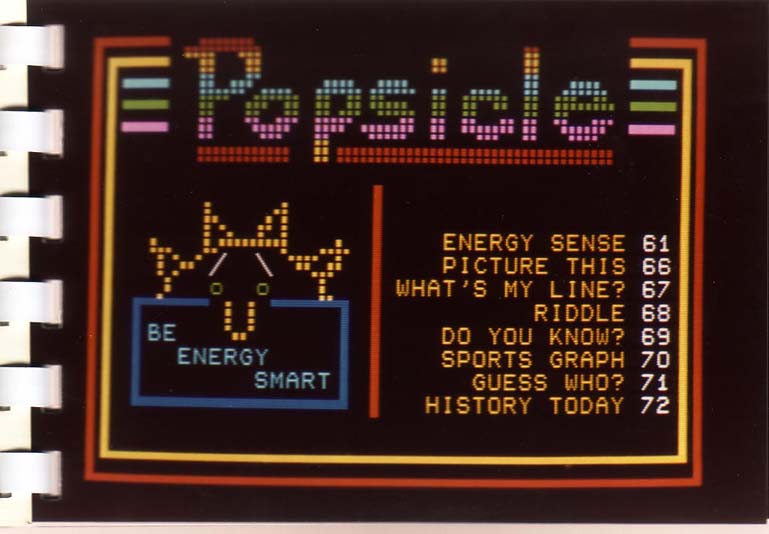
Teletext graphics by Richard Gingras, 1980. This service was called Now and ran on KCET-TV. It was part of a collaboration between CBS, NBC and PBS to test the French Antiope standard for teletext. The project was supported by Télédiffusion de France.
Images from Gingras’ website, which is only partly archived on archive.org. There’s an interview with Gingras about his teletext work here.
Post updated 2024.
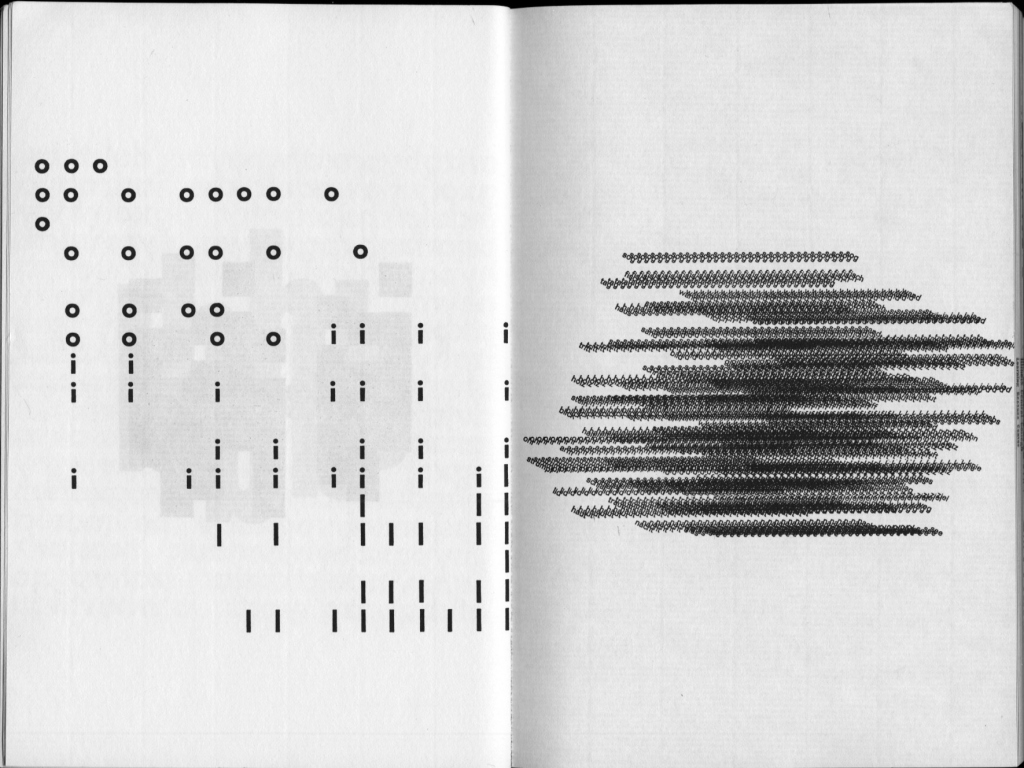
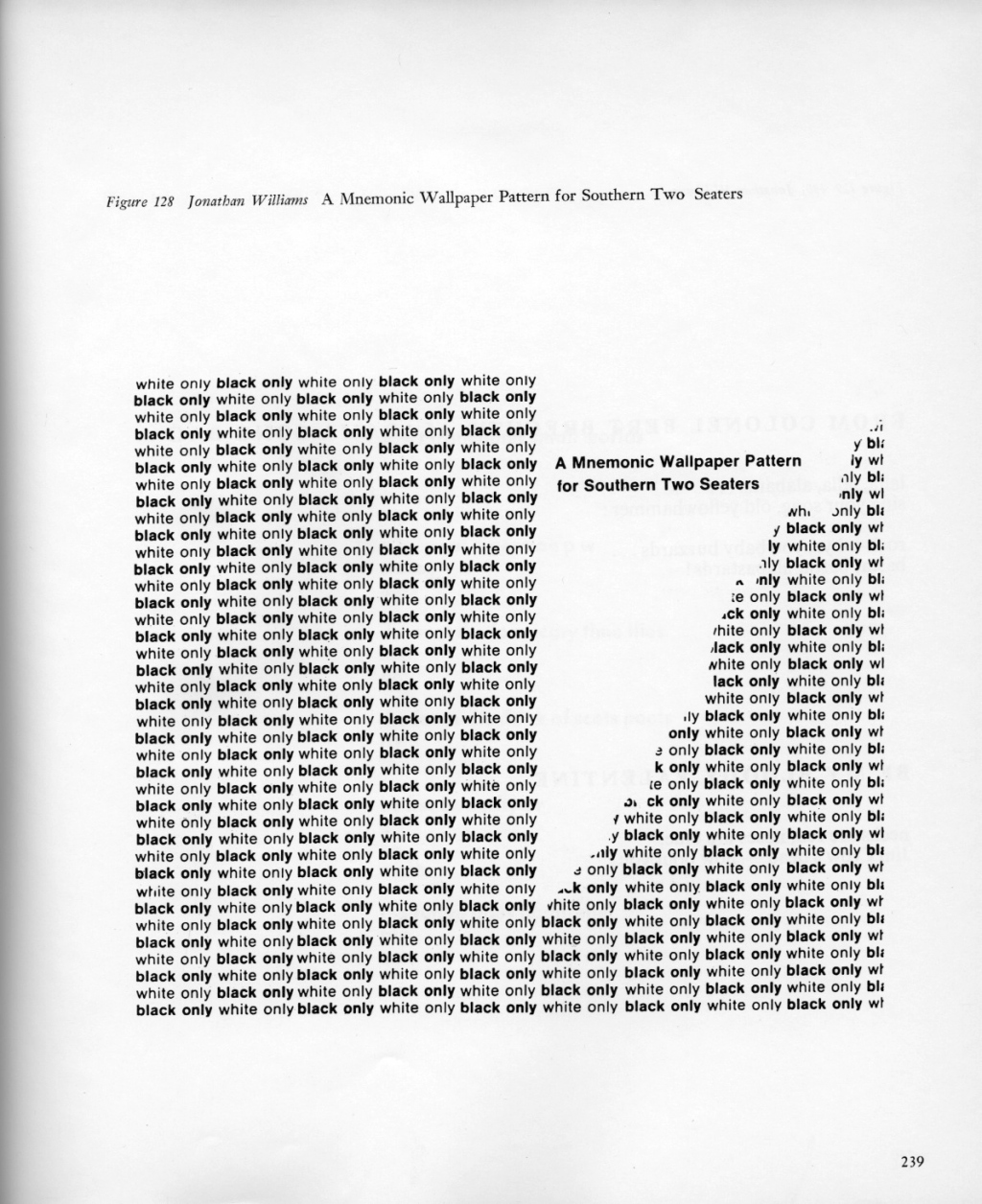
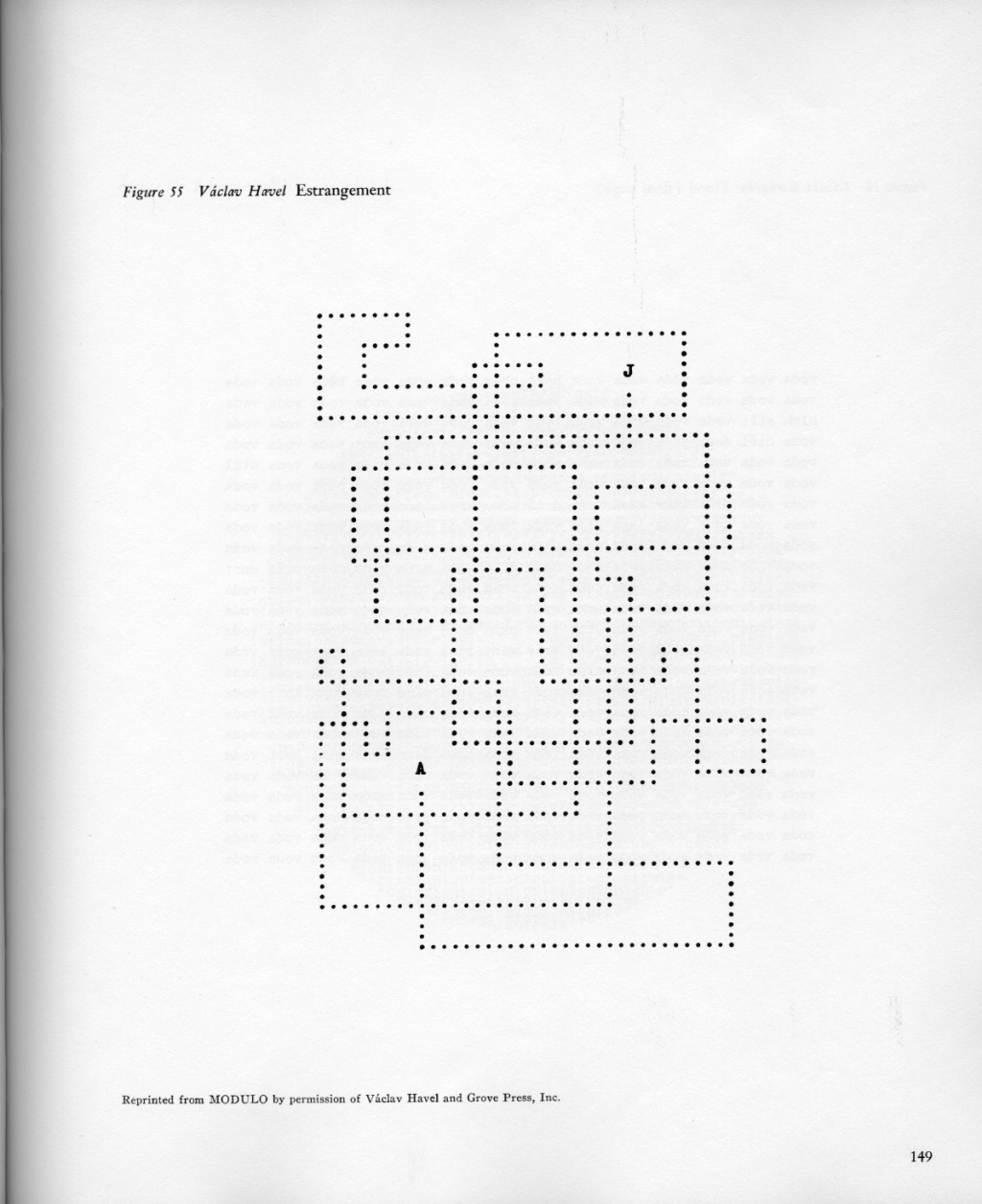
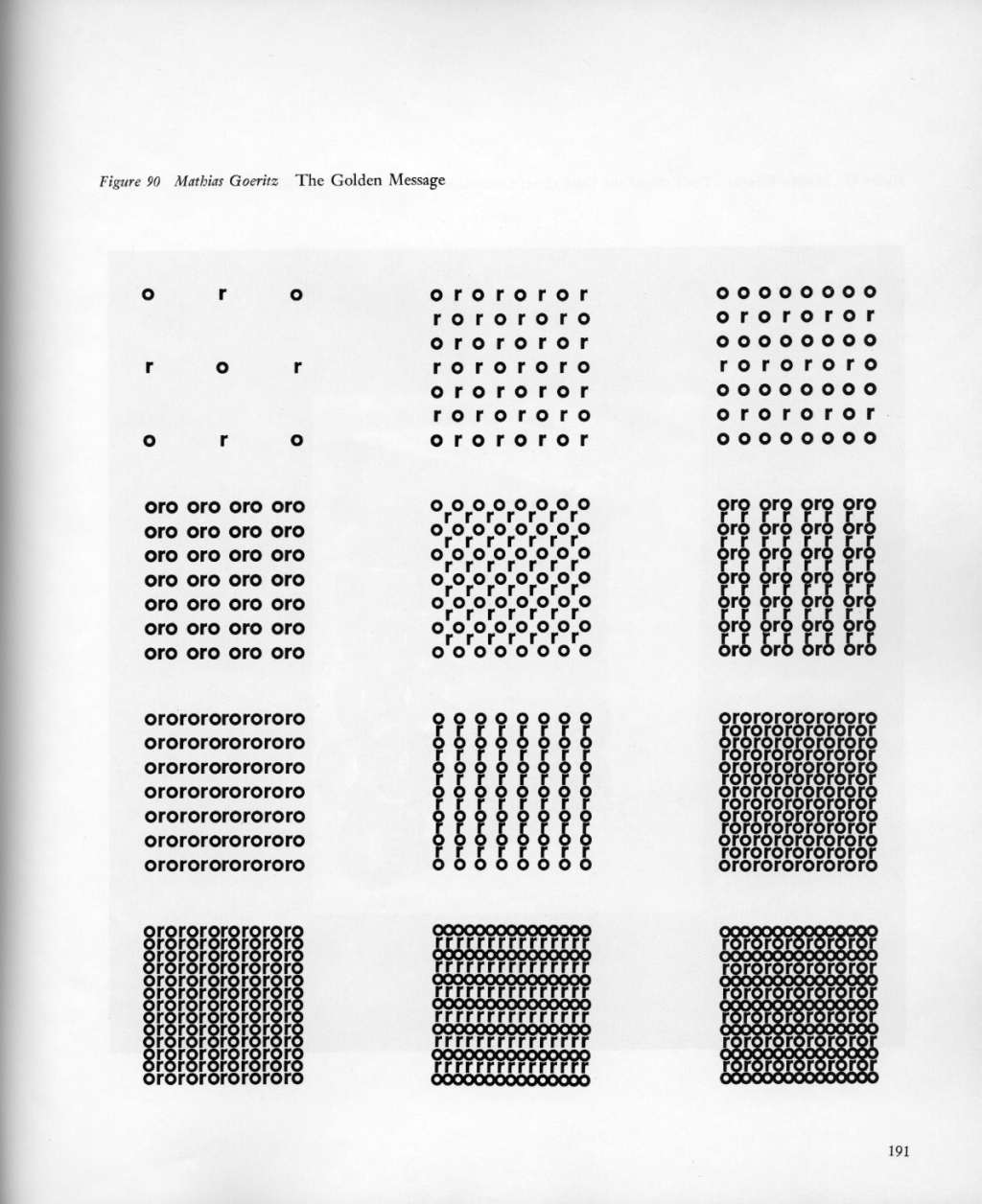
Untitled by Hansjörg Mayer, A Mnemonic Wallpaper Pattern for Souther Two Seaters by Jonathan Williams, Estrangement by Václav Havel and The Golden Message by Mathias Goeritz.
From Concrete Poetry: a World View, 1970. Post updated in 2024.
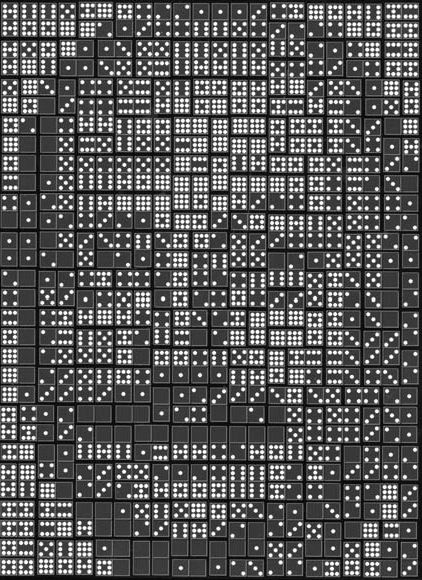
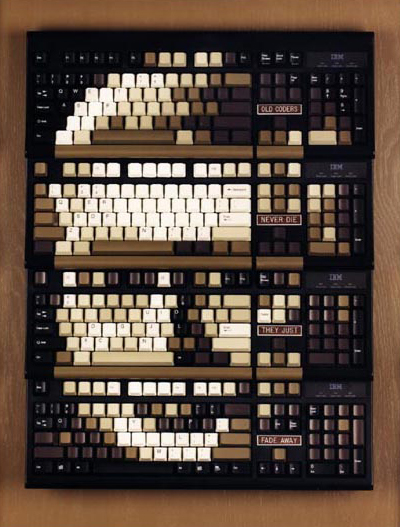
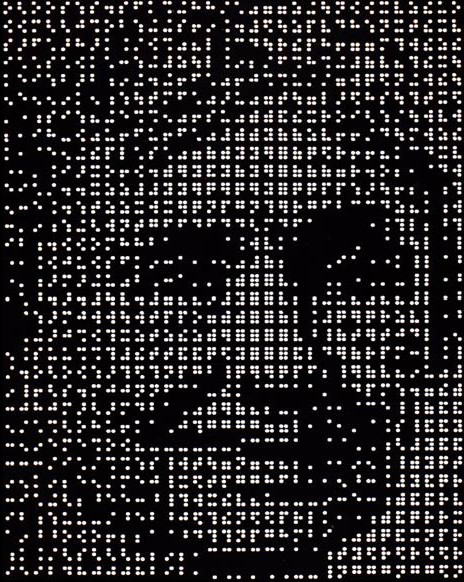
Mosaics by Ken Knowlton, 1990’s.
Toxic Wastes from A to Z (coming after you and me) by John Fekner is a parody of a children’s alphabet learning aid which runs alphabetically through a list of toxic pollutants. Martin Nisenholtz invites John Fekner, Andy Warhol, Keith Haring and others to experiment with an early interactive computer graphics system (Telidon) at New York University’s Alternate Media Center (Interactive Telecommunications Program). Fekner received his first international award at Toronto’s Video Culture Festival in the Videotex category.
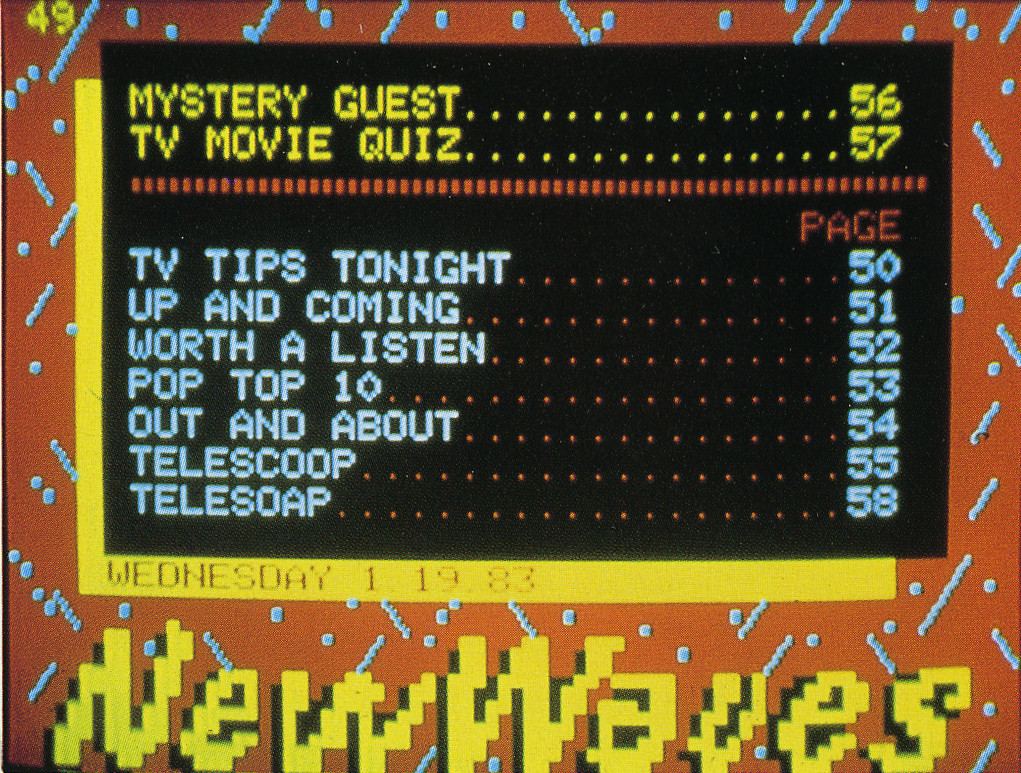
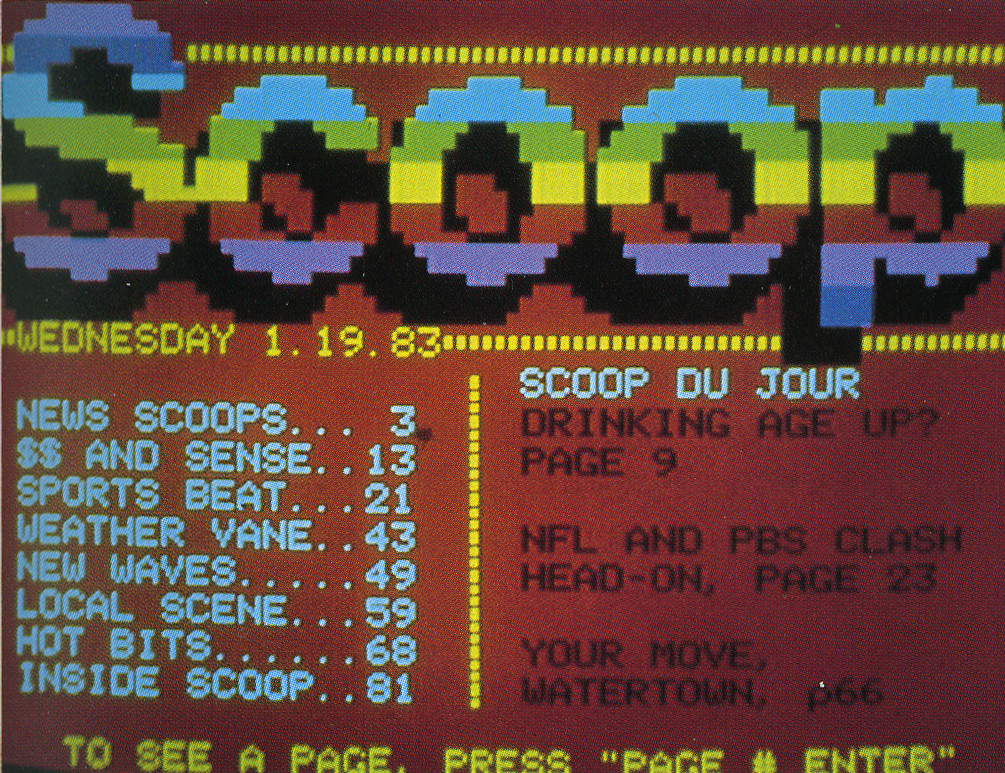
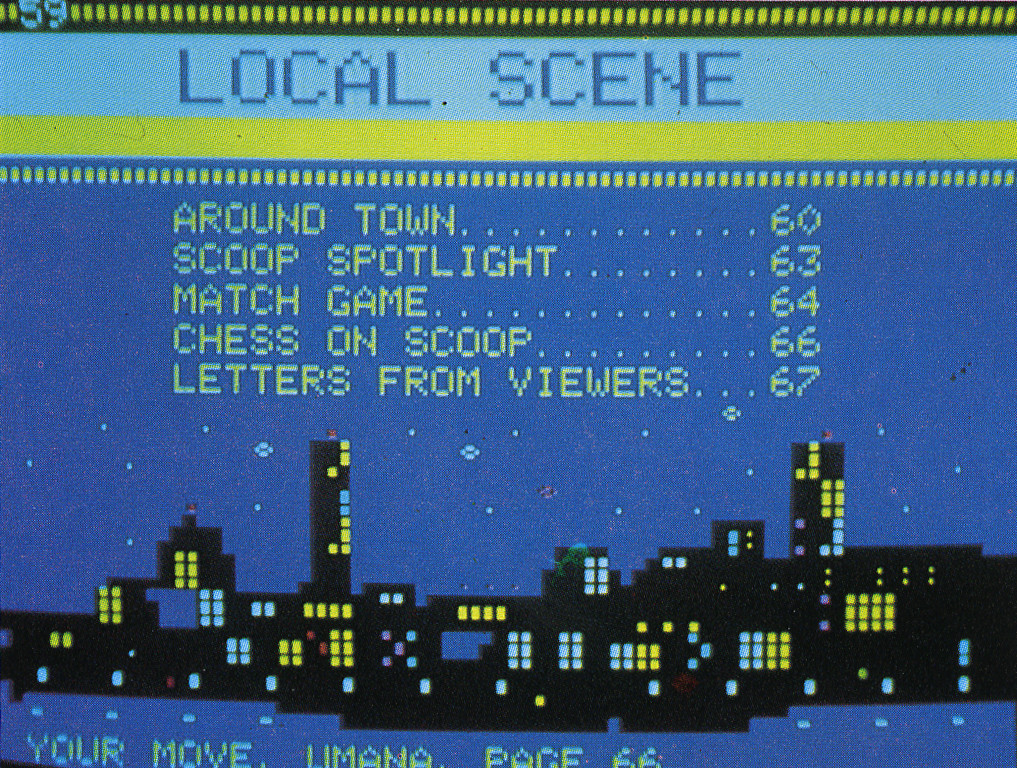
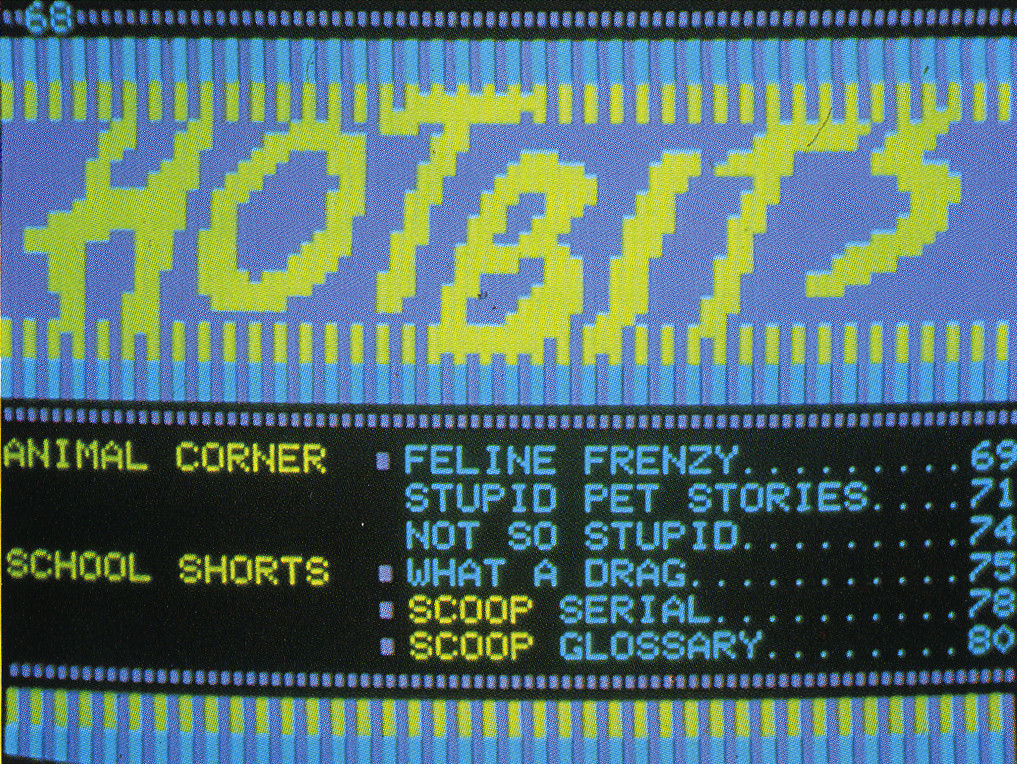
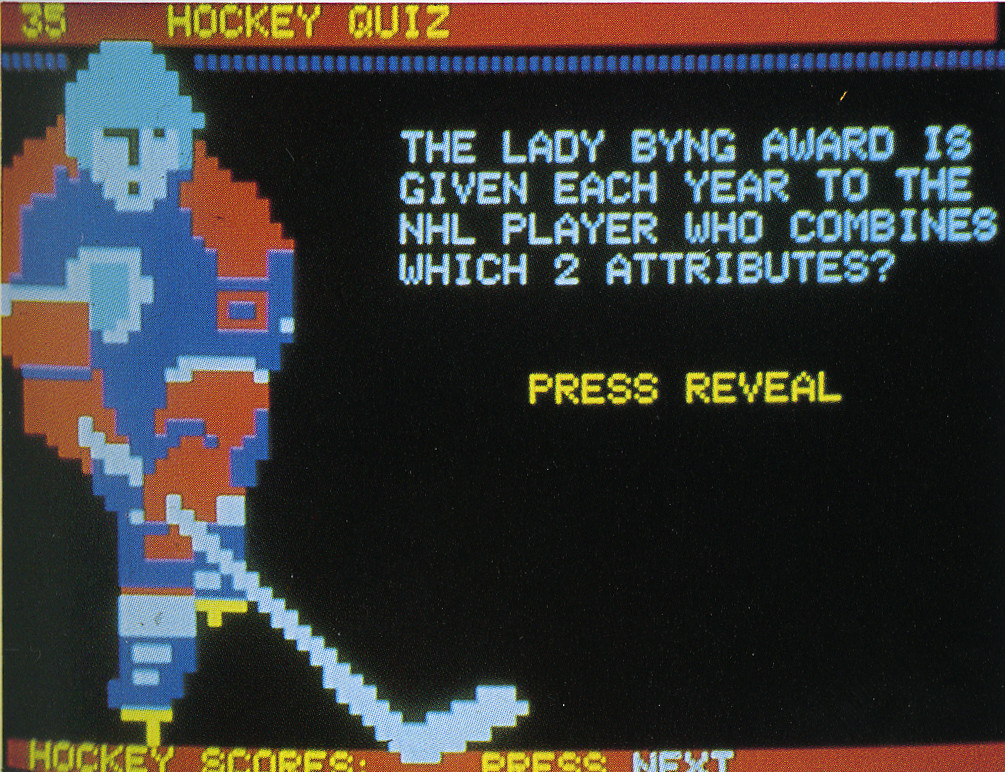
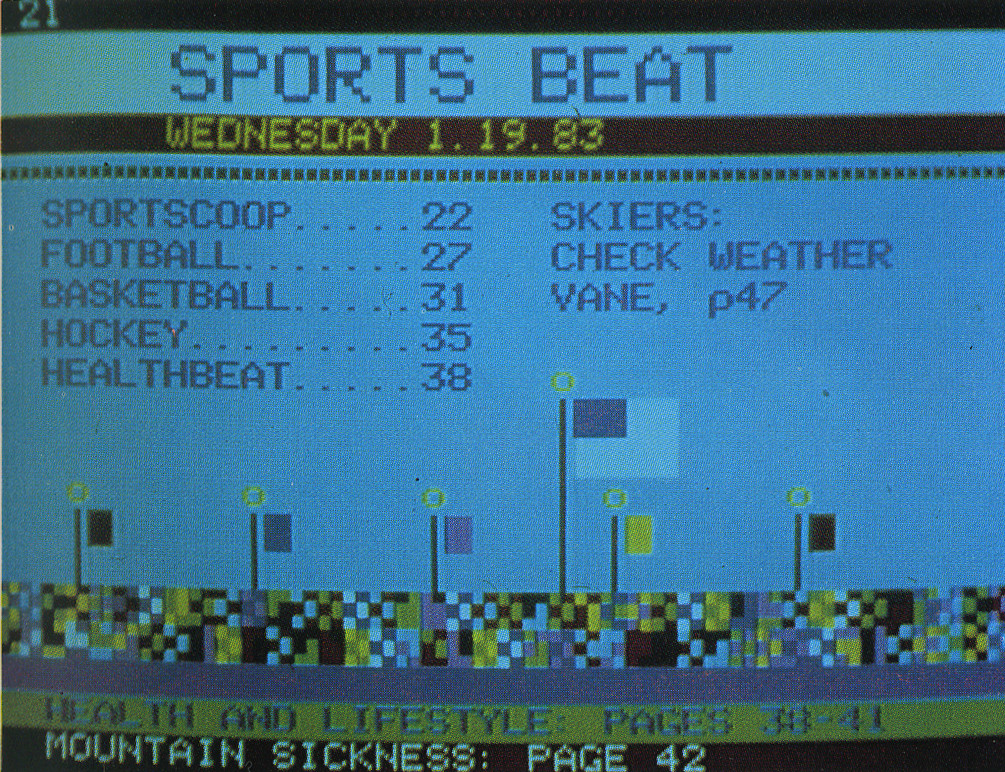
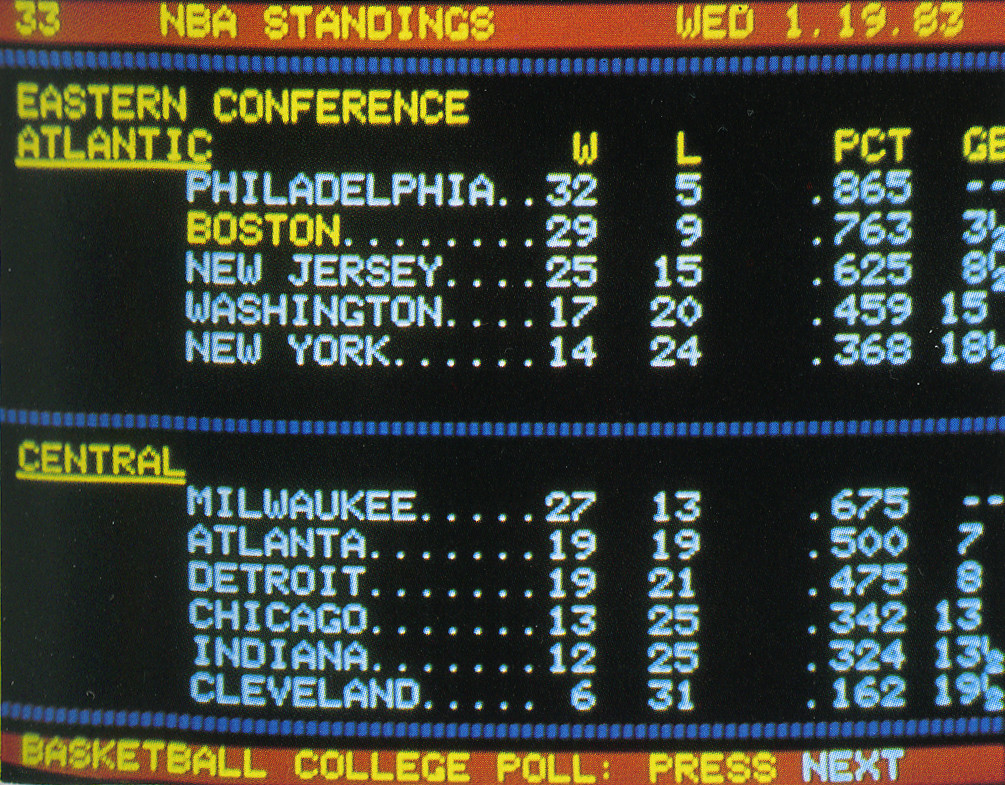
SCOOP was a teletext magazine for teenagers, available at ten high schools in USA, 1985. It was broadcasted on WGBH-TV in Boston using the NABTS/NAPLPS standards, which included the alpha-mosaic features of the French Antiope standard (see page 12).
“The kind of information presented (topical subjects, sports scores, around town information, etc.), the way it was presented (short, tightly edited segments), and the format (contemporary, graphic-heavy, easy to access) were appropriate to a teenage audience.”
More info in Formative Evaluation for Educational Technologies. Post updated in 2024.
Twilight Zone, an ASCII-animation made for the VT100 terminal by Rudy Borkowski 1983-1984. In a comment on the video he writes:
I am the creator of the VT100 TwilightZone. (I also did one for The Outer Limits which, if I recall, has my name printed at the end). I created it by writing a program in Basic in VAX/VMS to emit the entire escape sequence into a file that could then be “printed” out to the screen. I did this either in 1983 or 1984. I was working at RCA Government Communications Systems Division at the time. For a few years I kept a copy of the original code but then on some job transition I lost all the code I wrote at RCA. That entire sequence simply came out of my imagination and desire to have fun with cursor addressing, which was a bit of a hobby of mine at the time.
The video is archived here. More VT100 can be found at textfiles.com.