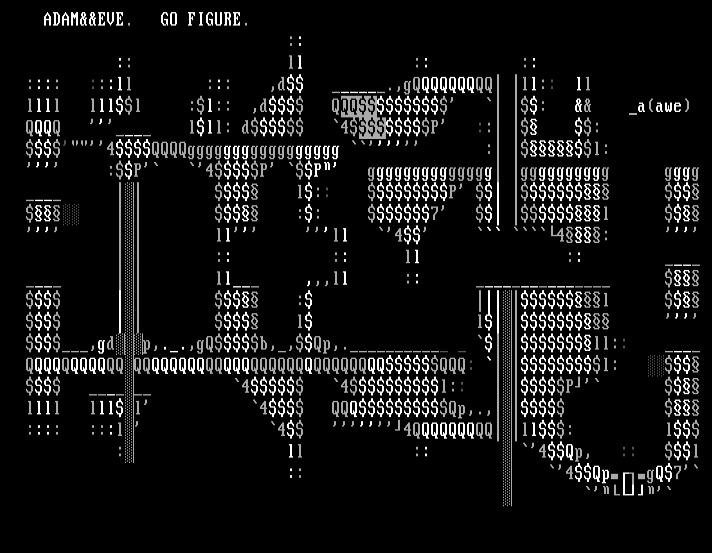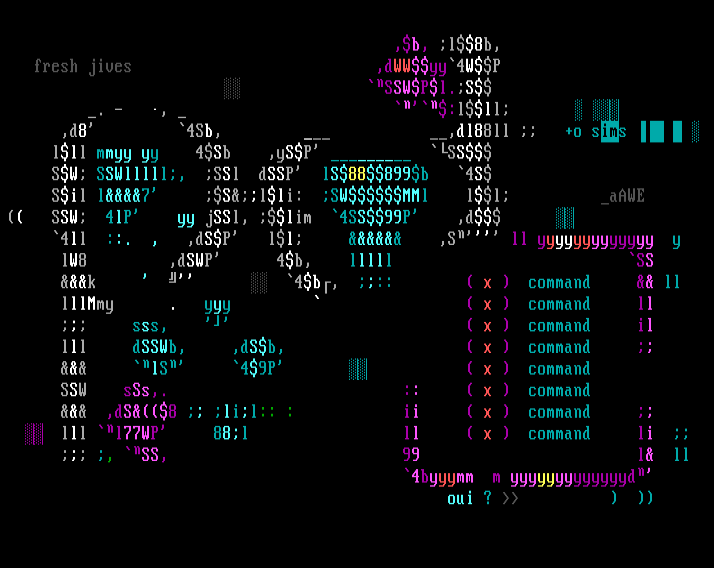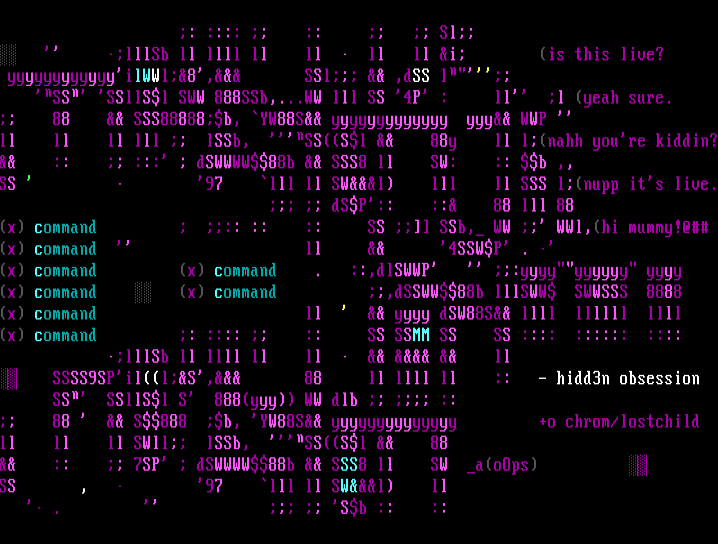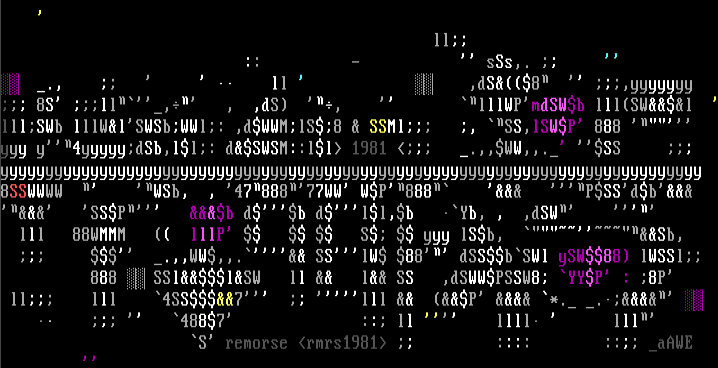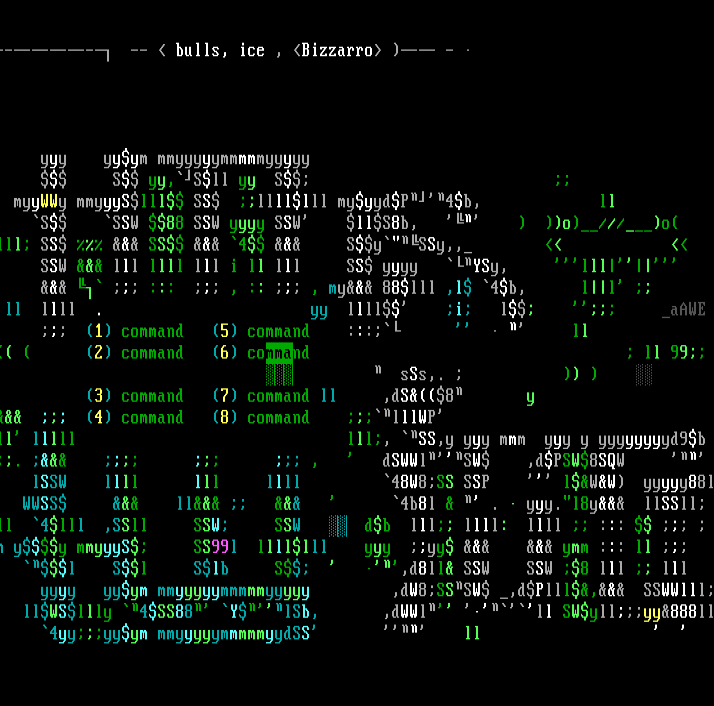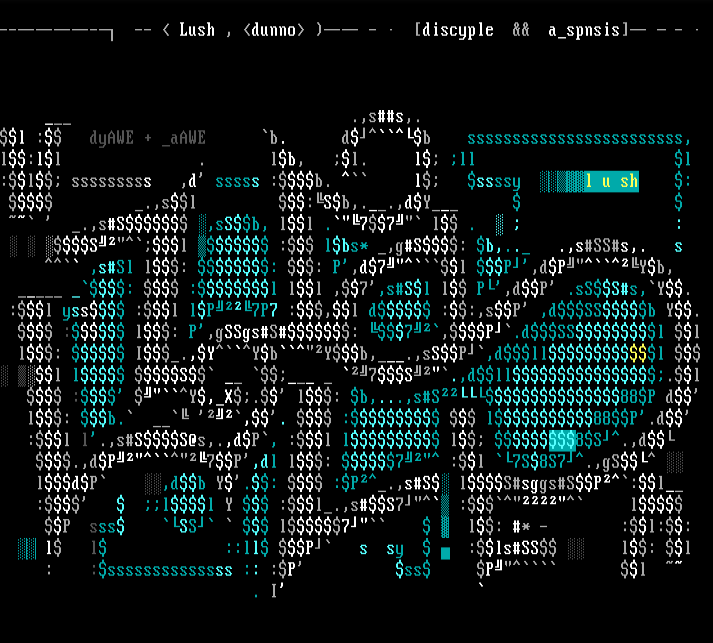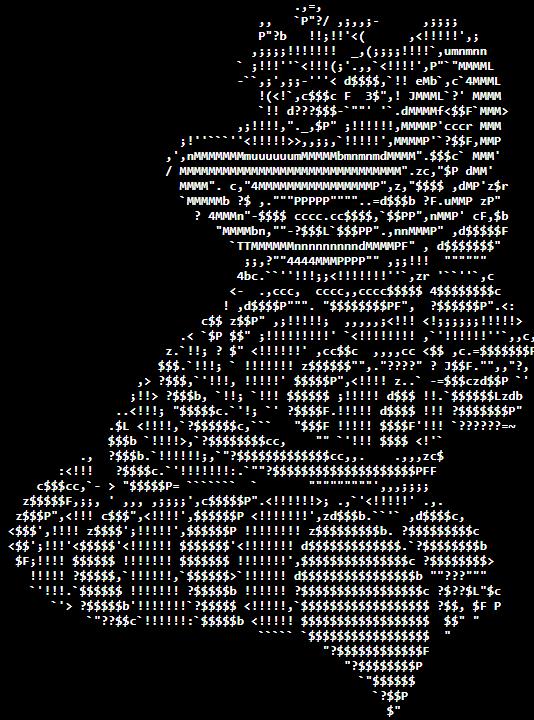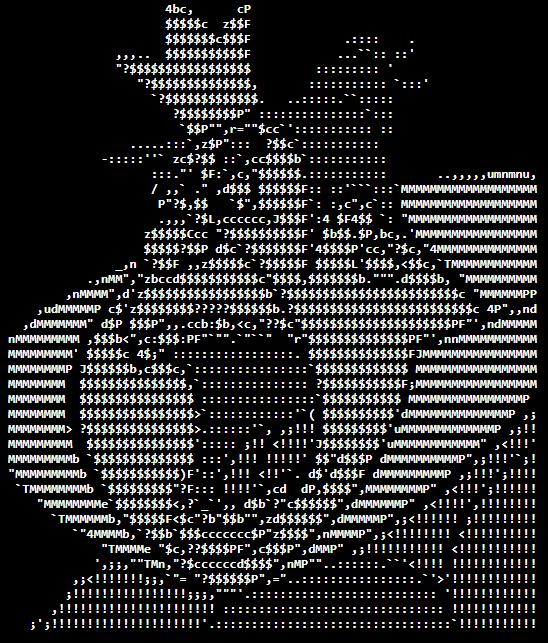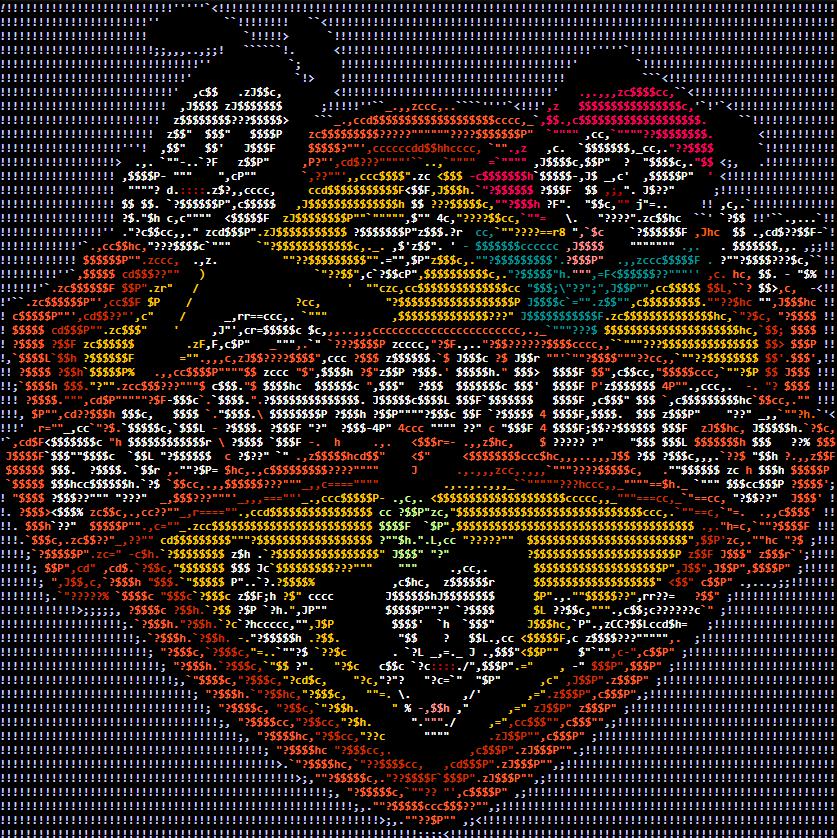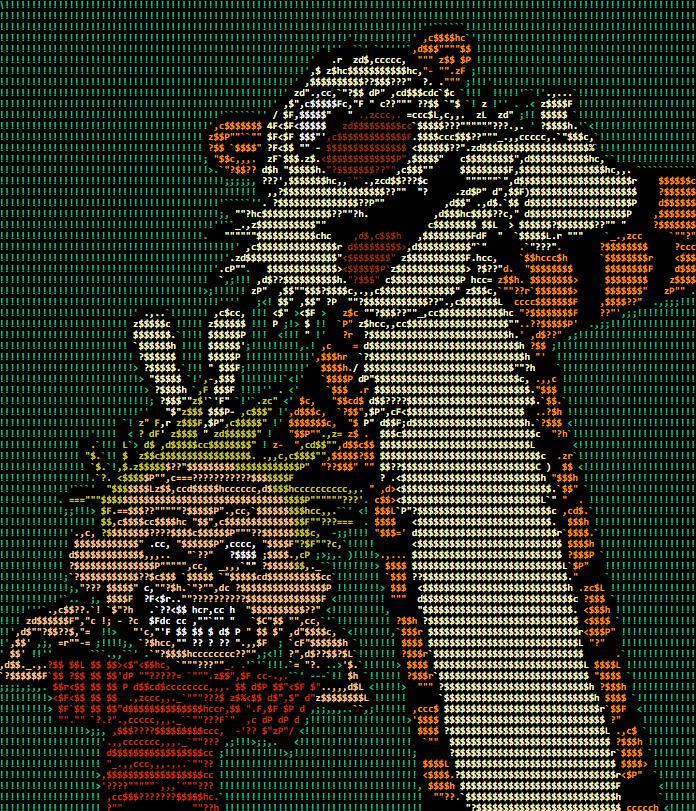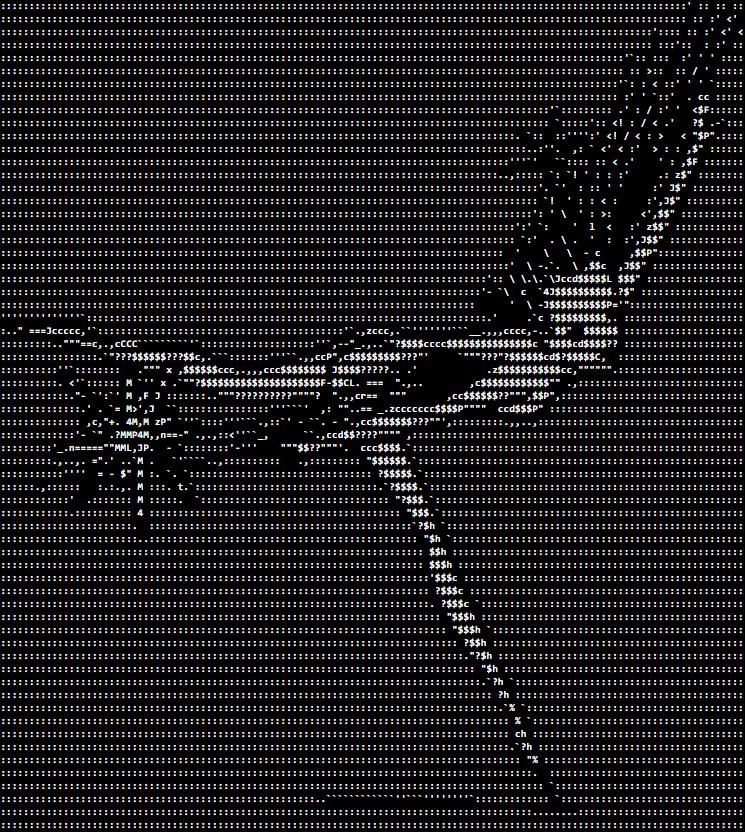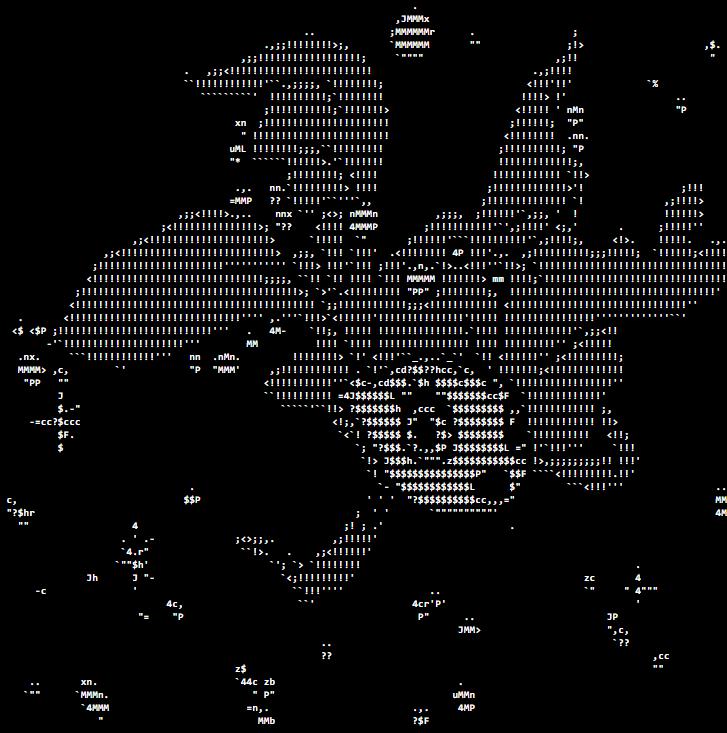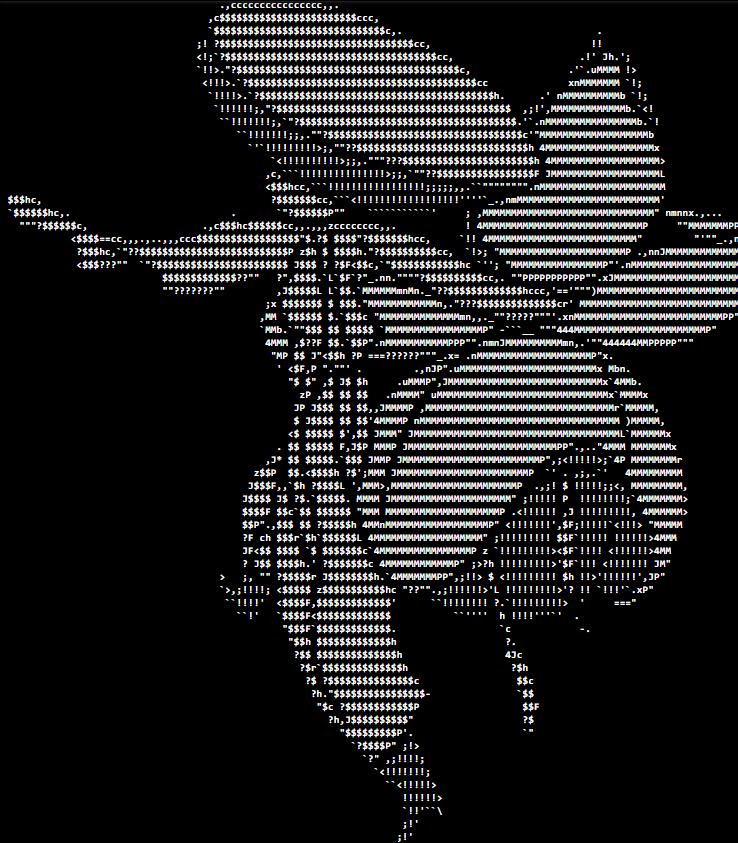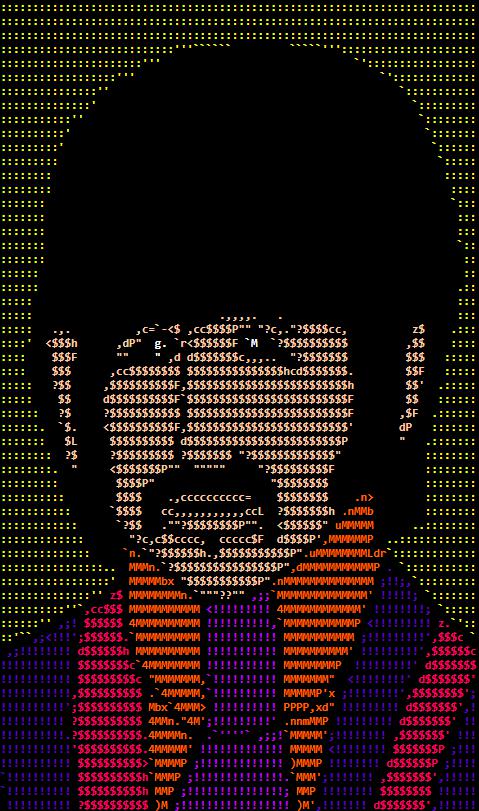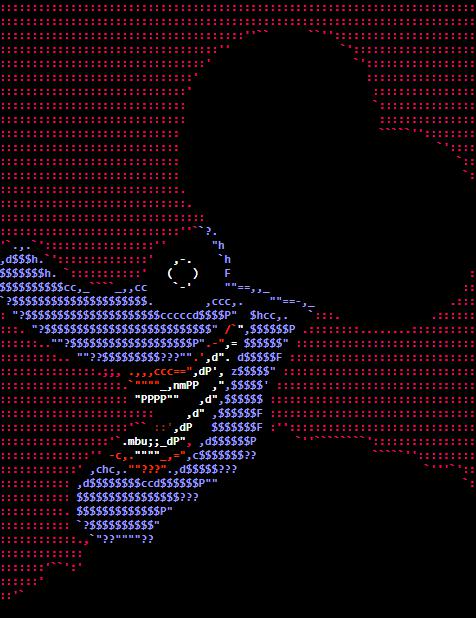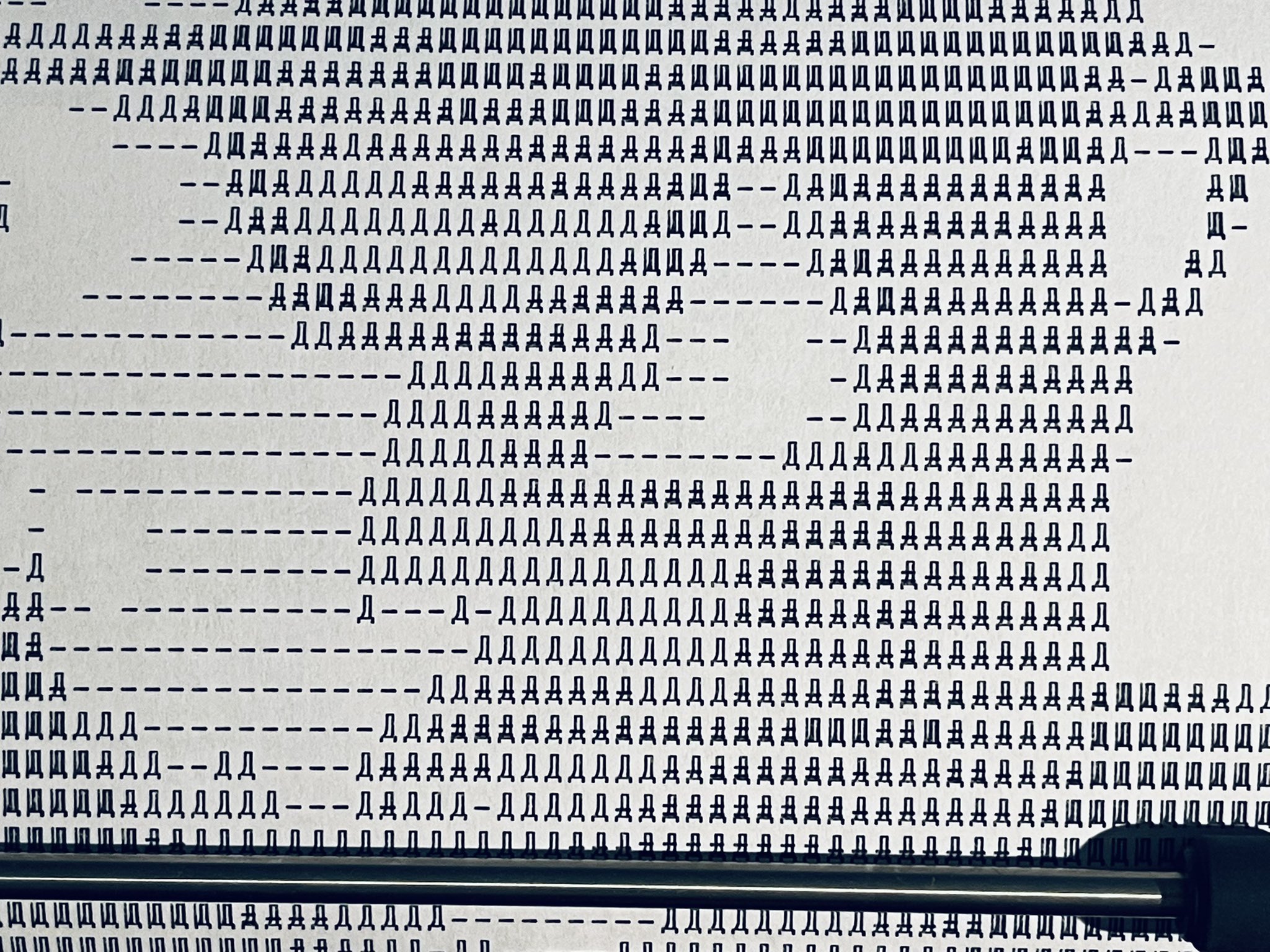
Coloured ASCII-work in HTML by Allen Mullen. His oldest dated work is from 1994, but he was probably active long before that. His great archive of Usenet ASCII goes back to 1991. He stopped working with ASCII around 1996.

He called this gifscii, because it involved converting GIFs to ASCII. He also called it pictures rather than art, to avoid discussions and insults about the merit of his work.

Mullen often drew the images from scratch with a Wacom tablet. He used three shades of grey which the gifscii converter turned into $, M and !. With a word processor’s replace function he’d introduce areas of C and :. He used macros to even out the edges and did a lot of manual editing. “I don’t believe it would be practical to try to copy my methods. There’s a lot more to it than I can describe here.”

Colour could be added in browsers such as Netscape Gold by selecting the text and choosing a colour. Most browsers supported a palette of 256 colours. Of course, colour could also be added manually in the HTML code.

More info here and more of his images here.

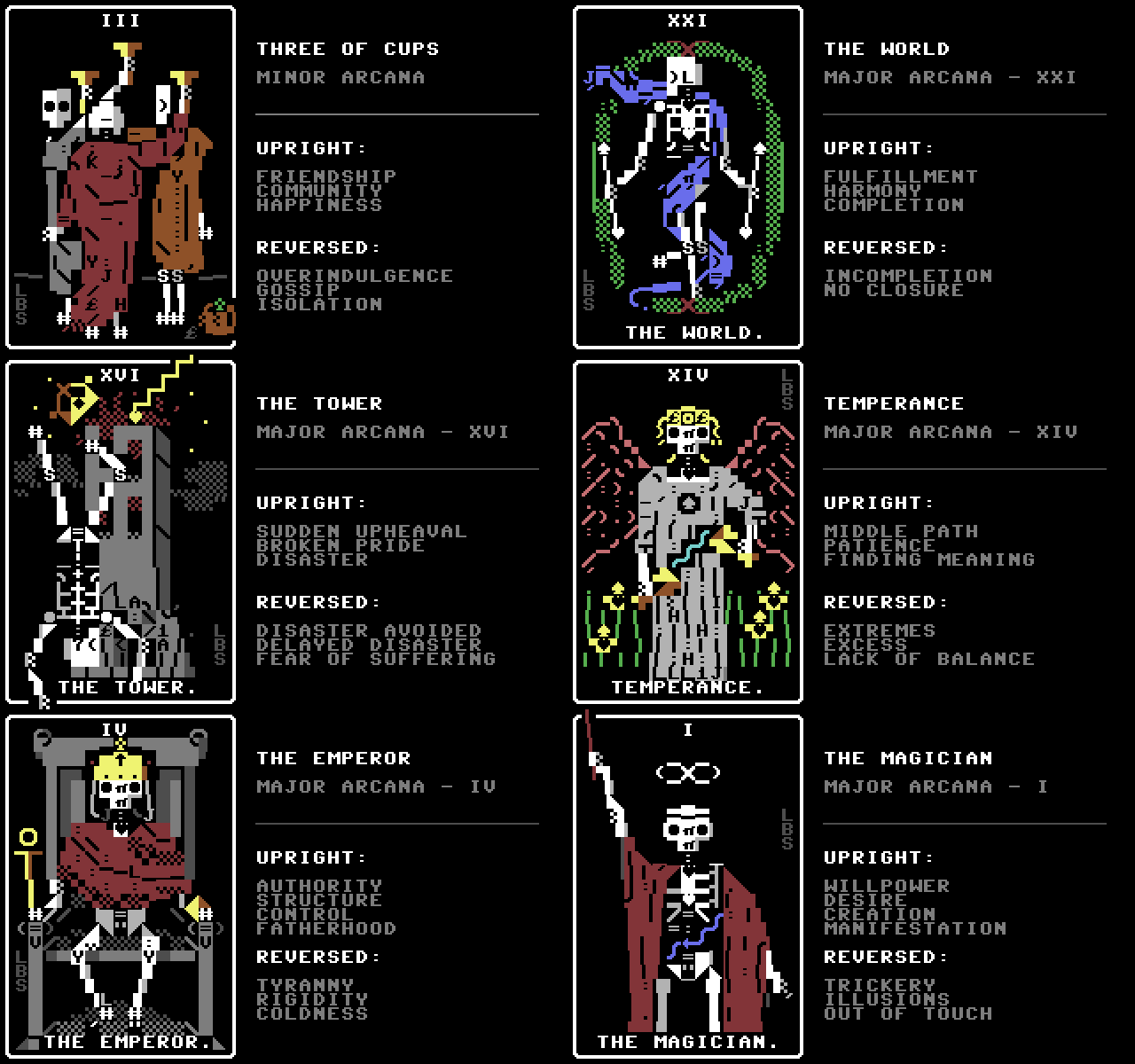
Some of many Tarot cards in PETSCII by littlebitspace, 2022. Watch them at sixteencolors.net, or why not use them? There are applications on Commodore 64 and on the web.

More littlebitspace posts.

Graphic Variations on Telidon by Pierre Moretti, 1979 or 1980. Telidon was a Canadian videotex service with textmode and vector graphics and Moretti was the first professional artist to work with Telidon.

Video saved here, just in case. Previously featured here.

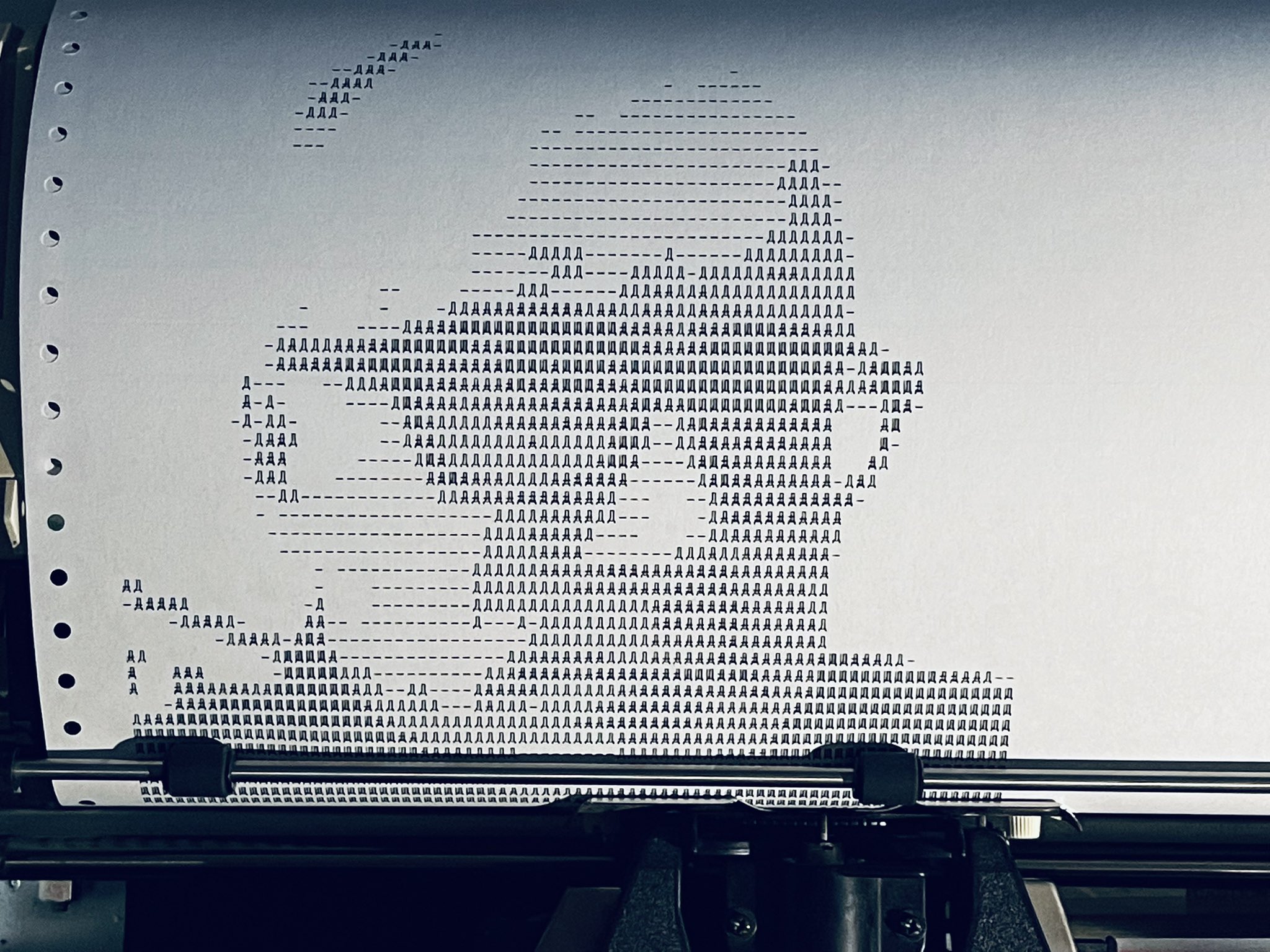
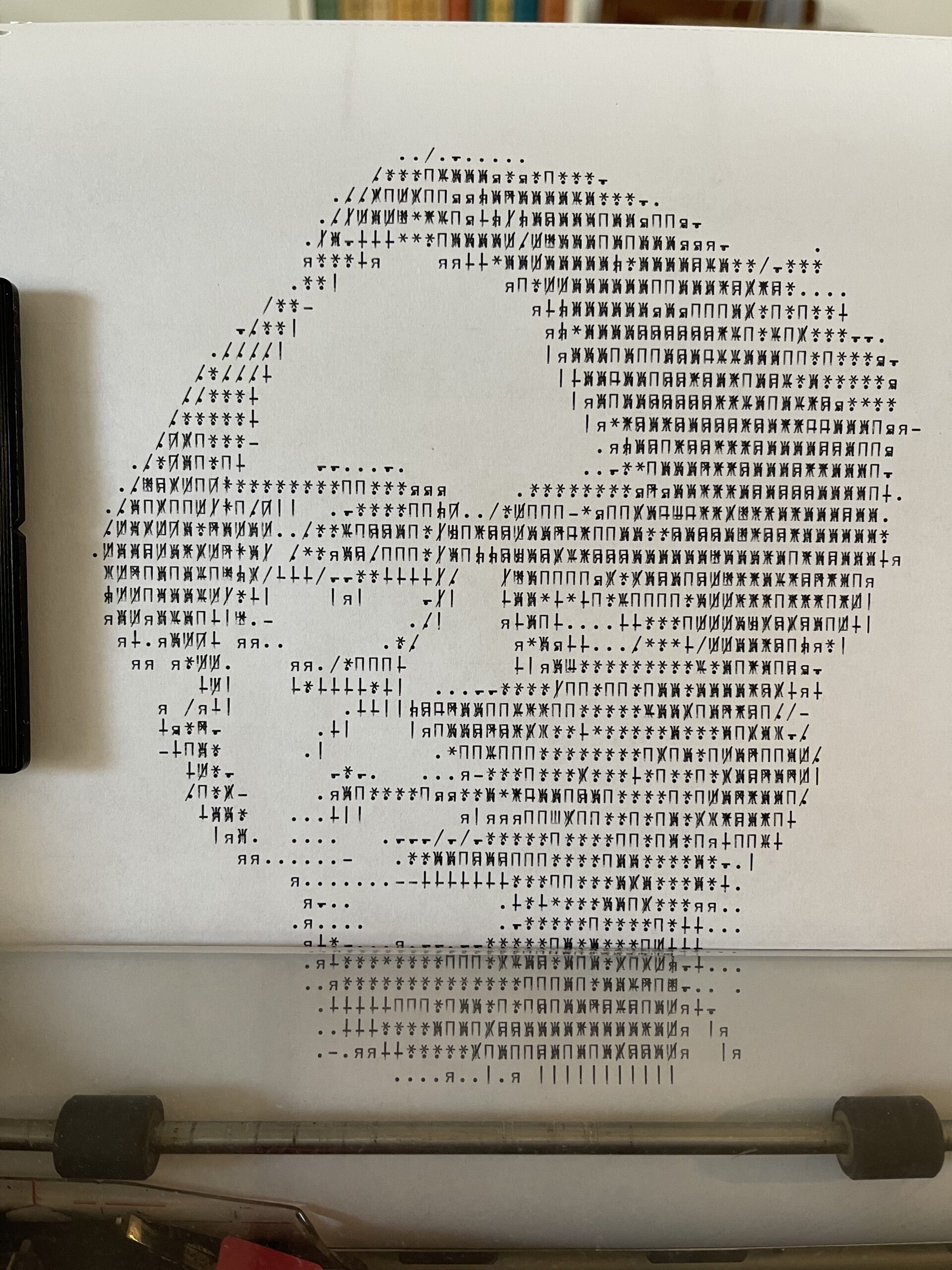
Cyrillic ASCII art (КОИ-7 art, more correctly) by Eric Furst, 2021-2022. Uses overstriking, ie printing characters on top of each other. More here.

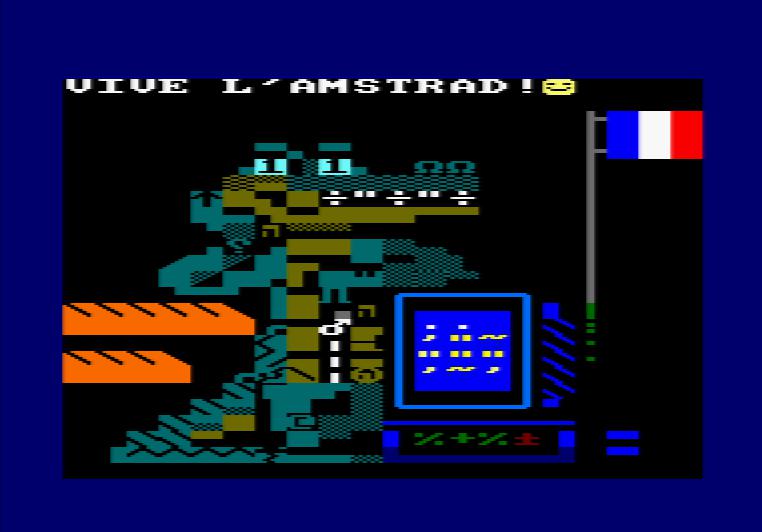
AMCROC by Christwoballs, 2021. AMSCII in 20×25 textmode for the Amstrad CPC. Competed in Amstrad ASCII Compo 2021.

PETSCII-works by Rui8bit, 2022-2024.

Robot Radar by t0m3000, 2024. Plain C64 PETSCII with only one backgound colour.

Works by Nigel Cottier from his Instagram. h/t: TYPE01

More posts on Cottier.

Cefucom 21 is an educational, electro-mechanical multimedia computer from Japan, 1983. Or a “multipurpose SLAP computer”, as they call it. While it looks like a screen on the left, that is actually just transparent plastic. Inside, you put “capsules” with pages, and the computer controls which page is displayed. The cassette player is used for playing audio, and for data storage.

Cefucom seems to be based on Sanyo’s PHC-25 that has a 32×16 or 16×16 textmode, so you can have a big font to display Japanese characters decently.

More: here, here, here, here.

A very sheep game by Adel Faure, 2022 using his Jgs font. And a very cheap gif. Runs in the browser. More posts.